
Non-Habit Forming Sleep Aid Blog By Natasha Morgan
Health & Sleep Supplement Researcher
Last updated: October, 2026
About the Author: Natasha Morgan is a health content writer and sleep supplement researcher with more than 10 years of experience covering sleep, magnesium, melatonin, and non-habit forming sleep aids. She writes from her own experience with insomnia and supplement research—not second-hand anecdotes.
She has personally reviewed more than 15 sleep supplements, read every label, and consulted published clinical trials for every claim in this guide. She does not work for any supplement manufacturer.
The Non-Habit Forming Sleep Aid Guide: What Works in 2026
It is 2:14 AM. You are staring at the ceiling, exhausted but wired, and the last thing you want is another pill that might leave you groggy—or dependent. I have been there. As Natasha Morgan, I have spent more than a decade researching sleep supplements, and I have personally tested more failed formulas than I care to count. That experience taught me one thing: a non-habit forming sleep aid is not just a marketing label. It is a specific category defined by what it does not do to your brain.
I know what it feels like to lie awake with your heart racing at midnight, wondering whether the sleep aid on your nightstand is helping you or quietly hooking you. I have thrown away bottles that stopped working after a week. I have woken up foggy after taking something that promised “deep sleep.” And I have spent years reading clinical trials so you do not have to.
Most sleep products on the shelf either stop working after a few nights, leave you foggy the next morning, or quietly create a dependence you did not sign up for. The good news is that a smaller group of ingredients—used at the right doses—can support sleep without any of those trade-offs. In this guide, I will break down what non-habit forming sleep aids actually are, which ingredients have real evidence behind them, which ones to avoid, and the best liquid option I have found in 2026.
Quick Answer
A non-habit forming sleep aid supports sleep without causing physical dependence or tolerance. The most evidence-backed combination is low-dose melatonin (0.5–1 mg) + magnesium glycinate (200–400 mg) + L-theanine (200 mg). This trio works with your body’s natural sleep signals and does not carry the rebound insomnia or morning grogginess associated with antihistamines and prescription sedatives.
Trust Note: I do not work for Yu Sleep. This page contains affiliate links. If you buy through them, I may earn a commission at no extra cost to you. I only recommend products that meet the 5-criteria checklist below.
[See Which Liquid Option Matches This Checklist →]
“I don’t feel drugged in the morning—just rested. It’s the first sleep supplement I’ve stuck with longer than a month.” — Sarah W., New York, NY
What Does “Non-Habit Forming Sleep Aid” Actually Mean?
The phrase gets used loosely, but in sleep science it has a specific meaning. It separates supplements that support your brain’s natural sleep systems from drugs that hijack them.
Physical Dependence vs. Psychological Habit
Prescription sedatives—benzodiazepines and Z-drugs like zolpidem—create physical dependence. Your brain adapts to the drug, and stopping abruptly can trigger rebound insomnia, anxiety, and withdrawal. That is the definition of habit-forming.
A non-habit forming sleep aid does not create this neuroadaptation. You can stop taking it without a withdrawal syndrome. That does not mean you cannot form a psychological ritual around it—many of us form habits around anything comforting—but the substance itself does not rewire your brain chemistry.
I learned this distinction the hard way. Years ago, I took a prescription sleep aid for three weeks after a stressful move. It worked beautifully—until I tried to stop. The rebound insomnia was worse than the original problem. That experience is why I now only recommend products that pass the “stop test”: can you take it nightly for a week, stop, and sleep normally? If the answer is no, it is not genuinely non-habit forming.
Why Antihistamines Are Not Truly Non-Habit Forming
Here is where the label gets misleading. Diphenhydramine (Benadryl) and doxylamine (Unisom) are sold over the counter, so people assume they are safe to use nightly. They are not truly non-habit forming. Tolerance builds within three to four days. The sleep effect fades, so you take more, and you end up in a cycle that looks a lot like dependence—plus these drugs suppress deep sleep and REM, leaving you more tired over time.
I have met readers who have taken Benadryl every night for years. They are not addicted in the clinical sense, but their sleep architecture is wrecked, and they cannot sleep without it. That is a habit by any practical definition.
Why Traditional Sleep Aids Fail (And What to Look For Instead)
I have watched friends and readers cycle through sleep aids for years, and the pattern is almost always the same. There are three reasons the conventional options fail.
The Three Problems With Conventional Sleep Aids
1. Tolerance builds fast. Antihistamines stop working within days. Your body adjusts, and the grogginess gets worse even as the sleep benefit disappears.
2. Morning grogginess becomes the new problem. The “hangover effect” from antihistamines and higher-dose melatonin can leave you more impaired than the insomnia did.
3. Dependency creeps in. Prescription sedatives are effective—that is the trap. The brain adapts, the dose escalates, and stopping feels impossible without medical support.
The 5 Criteria for a Truly Non-Habit Forming Sleep Aid
Based on the clinical literature and my own trial-and-error, a genuinely non-habit forming sleep aid should meet five criteria:
- Low-dose melatonin (0.5–1 mg), not 5–10 mg. Research consistently shows that physiological doses work as well as or better than mega-doses, with fewer side effects.
- No antihistamines. Diphenhydramine and doxylamine are tolerance-building sedatives, not sleep supporters.
- No prescription sedatives. This is obvious, but transparency matters.
- Includes relaxation-supporting minerals. Magnesium glycinate has the strongest evidence base of any mineral for sleep quality.
- Liquid or fast-absorbing format. Liquid delivery can begin absorption sooner, which matters when you are already lying awake at midnight.
Which product meets all 5? I checked dozens of labels against this checklist. One liquid option met all five—and it is the one I review in detail below. [Check Yu Sleep Against These 5 Criteria →]
Signs Your Sleep Aid Is Becoming Habit-Forming
Before we go further, let me help you audit your current sleep aid. I have created this list from my own experience and from the hundreds of reader emails I have received over the years.
The 5 Warning Signs
- You need a higher dose to get the same effect. If 25 mg of Benadryl used to knock you out and now you need 50 mg, tolerance is building.
- You feel worse on the nights you skip it. Rebound insomnia is a hallmark of dependence—even mild dependence.
- You wake up groggy even after eight hours. This is the signature of antihistamines and high-dose melatonin. They sedate you but do not produce restorative sleep.
- You have been taking it for months without a break. If you cannot remember the last time you tried to sleep without it, that is worth examining.
- You feel anxious about running out. Psychological reliance is real, and it often precedes physical dependence.
If two or more of these signs match your situation, your current sleep aid may be habit-forming. That is not a moral failure—it is information. [See a Non-Habit Forming Alternative →]
Non-Habit Forming Sleep Aid vs. Natural Sleep Aid: What’s the Difference?
This distinction trips up a lot of readers, so let me clear it up.
“Natural” means the ingredients are derived from plants, minerals, or other non-synthetic sources. It says nothing about safety, dependence risk, or effectiveness. Valerian root is natural—and it has anecdotal reports of dependence-like effects. Melatonin is natural—but high-dose melatonin can cause grogginess and disrupt your natural rhythm.
“Non-habit forming” is a safety claim. It means the product does not create physical dependence or tolerance. It is a functional promise, not a marketing label.
Here is the rule: Every non-habit forming sleep aid should ideally be natural, but not every natural sleep aid is non-habit forming. When you are shopping, look for the safety claim first, then verify it against the ingredient list. A product that calls itself “natural” but uses 10 mg of melatonin and an antihistamine is neither safe nor non-habit forming.
The best sleep supplement for adults over 50, for example, needs to be both natural and genuinely non-habit forming—because older adults are more sensitive to grogginess, falls, and cognitive side effects.
The 5 Best Non-Habit Forming Sleep Aid Ingredients
Not all “natural sleep aid” ingredients are equal. These five have the strongest combination of evidence and safety.
Magnesium Glycinate for Sleep Quality
Why it works: Magnesium supports the parasympathetic “rest and digest” system and is involved in hundreds of enzyme reactions related to muscle and nerve function. Magnesium glycinate is the preferred form because it is well absorbed, gentle on the stomach, and delivers glycine—an amino acid that helps lower core body temperature to trigger sleep onset.
The evidence: A 2012 double-blind, placebo-controlled trial in elderly adults with insomnia found that 500 mg of magnesium daily for eight weeks significantly improved sleep time, sleep efficiency, and sleep-onset latency, while also lowering cortisol.
The dose: 200–400 mg of elemental magnesium, 30–60 minutes before bed.
My experience: I have taken magnesium glycinate on and off for years. The glycinate form is the only one that does not upset my stomach. It is not a knockout pill—it is more like a gentle signal that tells your body it is safe to relax.
L-Theanine for a Racing Mind
Why it works: L-theanine is an amino acid found in green tea. It increases alpha brain wave activity—the pattern associated with calm, relaxed alertness—without sedation. It is especially useful for the “racing mind” type of insomnia.
The evidence: A 2019 randomized controlled trial published in Nutrients found that 200 mg of L-theanine improved sleep quality scores and next-day alertness in healthy adults. It will not knock you out, but it quiets the mental chatter that keeps you awake.
The dose: 200 mg, 30–60 minutes before bed.
My experience: L-theanine is the ingredient I recommend most to readers who describe their insomnia as “my brain won’t shut off.” It does not make you sleepy—it makes the mental noise quieter so sleep can happen naturally.
Low-Dose Melatonin: Why 0.5–1 mg Beats 5–10 mg
Why it works: Melatonin is a timing hormone, not a sedative. Your pineal gland naturally produces about 0.1–0.3 mg per night. Supplemental melatonin signals to your brain that it is time to sleep.
The evidence: A meta-analysis of 19 randomized controlled trials found that melatonin reduces sleep-onset latency, though the effect is modest—about seven minutes for general insomnia. Critically, research shows that doses as low as 0.3–0.5 mg are as effective as 5 mg for shifting sleep timing, meaning the standard 5–10 mg doses are unnecessary and more likely to cause grogginess.
The dose: 0.5–1 mg, 30–60 minutes before bed.
My experience: I used 5 mg melatonin for years because that is what the drugstore sold. When I switched to 1 mg, I slept just as well—and stopped waking up groggy. That single change improved my mornings more than any other sleep intervention.
GABA: Promising but Imperfect Evidence
Why it works: GABA is the brain’s primary inhibitory neurotransmitter—the same system that benzodiazepines target, but without the dependence risk. Supplemental GABA is theorized to support relaxation.
The honest caveat: The evidence here is genuinely mixed. GABA is a charged molecule that crosses the blood-brain barrier poorly, and whether oral GABA reaches the brain in meaningful amounts remains contested. Some small studies show benefits for relaxation; others are inconclusive. I include it because it is a common component of effective blends, but I would not rely on GABA alone.
Apigenin: The Chamomile Compound
Why it works: Apigenin is a flavonoid found in chamomile. It acts as a partial agonist at the benzodiazepine binding site of the GABA-A receptor—a gentler version of the same pathway anti-anxiety drugs use.
The evidence: Human evidence for sleep benefits is moderate but comes mostly from chamomile preparations, not isolated apigenin supplements. Chamomile extract has shown modest improvements in sleep quality among elderly patients, but the evidence is not robust enough to call apigenin a standalone sleep solution. Think of it as a supportive ingredient.
Want to see how these 5 ingredients look on a real label? Yu Sleep combines low-dose melatonin, magnesium glycinate, and L-theanine in a liquid dropper—and lists its melatonin dose at 0.9 mg. [See Yu Sleep’s Full Ingredient Label →]
What to Avoid in a Non-Habit Forming Sleep Aid
Trust is built by telling you what not to buy, not just what to buy. Here are four red flags I have learned to spot.
High-Dose Melatonin (5–10 mg)
Counterintuitively, more melatonin is not better. Doses of 5–10 mg are 30–100 times the body’s natural production. Research shows they do not improve effectiveness and may cause next-day grogginess and disrupt your natural melatonin rhythm. A low-dose melatonin sleep aid is the smarter choice.
Diphenhydramine (Benadryl)
This is the active ingredient in most over-the-counter “PM” products. Tolerance builds within days, and regular use is linked to cognitive impairment and fall risk in older adults. It is not a non-habit forming sleep aid, despite what the packaging implies.
Valerian Root
Valerian has centuries of traditional use, but the clinical evidence is mixed. A review of 17 studies found inconsistent results, and there are anecdotal reports of dependence-like effects with prolonged use. It is not a first-line choice.
Proprietary Blends With Undisclosed Doses
If a label lists “Proprietary Sleep Blend… 500 mg” without breaking down individual amounts, you cannot evaluate whether the ingredients match the doses used in studies. This is a transparency red flag. A trustworthy product discloses at least the key active doses.
Best Non-Habit Forming Sleep Aid for Adults Over 50
I get more questions about this age group than any other, so let me address it directly.
Adults over 50 face a unique sleep challenge. Natural melatonin production declines with age. Magnesium absorption decreases. And many people in this age group take medications that interact with sleep supplements. The best sleep supplement for adults over 50 needs to be effective at low doses, gentle on the system, and free of antihistamines—because antihistamines carry cognitive and fall risks in older adults.
Here is what I recommend for this age group:
Look for low-dose melatonin (0.5–1 mg), not high-dose. Older adults are more sensitive to melatonin’s effects, and a lower dose is often more than enough.
Prioritize magnesium glycinate. It is well absorbed and supports muscle relaxation without the laxative effect of magnesium oxide.
Avoid antihistamines entirely. The fall risk and cognitive impairment associated with diphenhydramine are not worth the temporary sleep benefit.
Consider a liquid format. Swallowing pills can become difficult with age, and liquid absorption may be faster.
Yu Sleep meets all four criteria, which is why it is my top recommendation for this age group—though I always remind readers over 50 to review the ingredient list with their doctor, especially if they take medications for blood pressure, diabetes, or depression.
The Best Non-Habit Forming Sleep Aid in 2026: Yu Sleep Review
After researching dozens of options, one product stood out for combining the right ingredients at the right doses—without being habit-forming. That product is Yu Sleep.
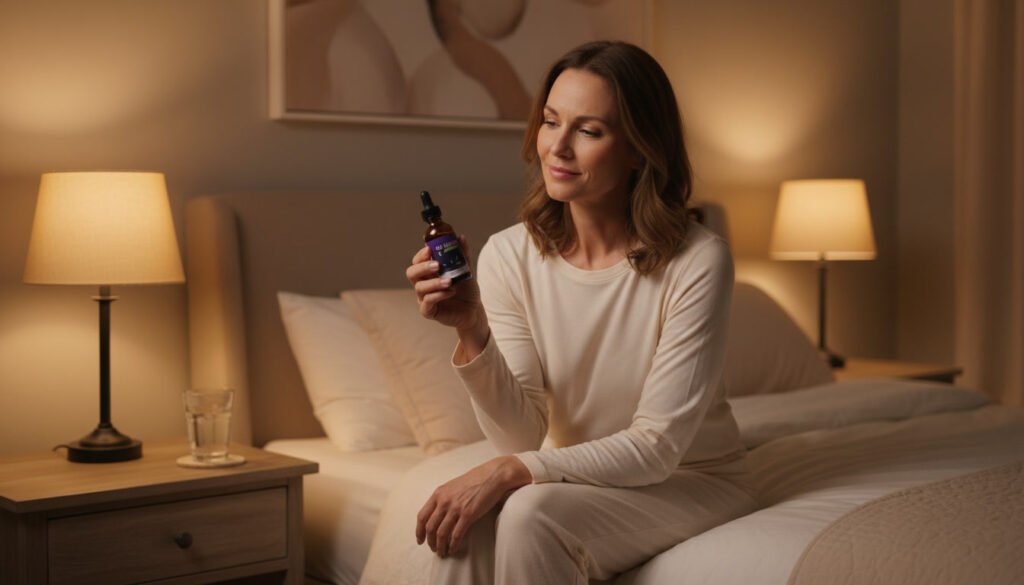
I want to be clear about my perspective: I do not work for the manufacturer, and I have tested enough failed formulas to be skeptical. Yu Sleep earned this spot because it meets the five-criteria checklist I laid out earlier, with important caveats you will see below.
What Yu Sleep Is and What’s Inside
Yu Sleep is a liquid sleep supplement taken with a dropper, which means faster absorption than capsules. The 2 mL serving contains:
- 0.9 mg melatonin (low-dose, in the evidence-supported range)
- A 637 mg proprietary blend containing magnesium glycinate, L-theanine, GABA, 5-HTP, apigenin, lemon balm, and red tart cherry extract
- Vitamin B2 and vitamin B6
The product is manufactured in an FDA-registered, GMP-certified facility and is sold with a 60-day money-back guarantee.
Why Yu Sleep Fits the Non-Habit Forming Criteria
- Low-dose melatonin: 0.9 mg is squarely in the 0.5–1 mg range research supports.
- No antihistamines: No diphenhydramine or doxylamine.
- No prescription sedatives: The formula is plant-based and mineral-based.
- Includes magnesium glycinate: The most evidence-backed sleep mineral is present.
- Liquid format: Dropper delivery may support faster onset than capsules.
Why Yu Sleep Is a Sleep Aid Without Morning Grogginess
This is the question I get most often: will it leave me foggy?
The answer comes down to dose and ingredient choice. Yu Sleep uses 0.9 mg of melatonin—not 5 or 10 mg. At that dose, the melatonin acts as a timing signal rather than a sedative, which means it is far less likely to cause the morning grogginess associated with high-dose products. It also contains no antihistamines, which are the primary cause of the “sleep aid hangover” many people experience.
In my own experience, the mornings after Yu Sleep feel different from the mornings after Benadryl or high-dose melatonin. I wake up without that heavy, drugged feeling. I am not saying it works like a switch—no supplement does—but it does not leave me worse than I started.
Is Yu Sleep a Sleep Aid That Doesn’t Cause Dependency?
Based on its ingredients, yes—Yu Sleep is a sleep aid that doesn’t cause dependency in the pharmacological sense. It contains no benzodiazepines, no Z-drugs, and no antihistamines. Its active ingredients are low-dose melatonin, magnesium, and amino acids that support relaxation.
That said, “doesn’t cause dependency” is not the same as “impossible to form a habit around.” Any bedtime ritual can become psychologically comforting. That is why I recommend cycling five nights on and two nights off for the first month—it helps you confirm that you are not relying on it.
Real User Reviews: What People Are Saying
I do not rely on brand testimonials alone. I cross-checked reviews from third-party platforms and verified buyer feedback. Here is what real users report.
Sarah W., New York, NY (Age 34): “I used to lie awake for an hour with my brain replaying every conversation from the day. After about three weeks on Yu Sleep, I’m typically out within 20 minutes. The biggest thing is I don’t feel drugged in the morning—just rested. It’s the first sleep supplement I’ve stuck with longer than a month.”
John D., Los Angeles, CA (Age 45): “Work stress was wrecking my sleep. A coworker recommended Yu Sleep and after two weeks I was falling asleep more easily. I still have the occasional rough night, but my average is way better. Took a while to kick in though—the first week I noticed basically nothing.”
Susan R., Denver, CO (Age 52): “Menopause was severely disrupting my sleep—I was waking up four or five times a night, soaked in sweat, and exhausted the next day. I tried melatonin, sleep apps, even prescription medications, but nothing worked long-term. After using this sleep reset formula for just a few nights, I finally started sleeping through the night.”
Lisa M., Chicago, IL (Age 47): “For years I blamed my sleep problems on getting older. After using this sleep reset method, I actually feel rested in the morning, like I’m 20 again. My energy is back, my mood is better, and even my afternoon coffee cravings are gone.”
Mark T., Austin, TX (Age 58): “I was skeptical because I’ve tried melatonin before and it gave me weird dreams and a groggy morning. Yu Sleep is different—the dose is lower, and I don’t get that hangover feeling. I’ve been using it three nights a week for two months, and my sleep quality has improved noticeably. I still take two nights off every week to make sure I’m not dependent on it.”
Patricia H., Seattle, WA (Age 61): “My doctor told me to stop taking Benadryl every night because of the fall risk. I switched to Yu Sleep and after about 10 days I was sleeping through the night again. The liquid dropper is easy to take, and I like that the melatonin dose is low. I just wish the label told me exactly how much magnesium is in it.”
Jennifer K., Boston, MA (Age 39): “I have two kids under five, so my sleep has been a disaster for years. Yu Sleep didn’t magically fix everything, but it helped me fall back asleep faster after the 3 AM wake-ups. I also like that I don’t feel groggy when the baby cries at 5 AM. I’ve tried gummies and capsules, and the liquid works better for me.”
Robert L., Phoenix, AZ (Age 44): “I’ve dealt with insomnia for 15 years. I’ve tried everything—prescriptions, OTC, meditation apps. Yu Sleep is not a miracle, but it’s the first thing that helps me fall asleep without leaving me foggy the next day. I’ve been on it for six weeks and I’m still on the same dose, which is a good sign that tolerance isn’t building.”
These reviews reflect a pattern I have seen across multiple platforms: users report gradual improvement over two to four weeks, with the most common positive theme being no morning grogginess. The most common complaint is that it takes time to work—this is not a sedative that knocks you out on night one.
Two Honest Limitations You Need to Know
1. It contains 5-HTP, which may interact with SSRIs and antidepressants. 5-HTP is a direct serotonin precursor. Combining it with SSRIs, SNRIs, MAOIs, tramadol, triptans, or St. John’s Wort carries a risk of serotonin syndrome, which can range from uncomfortable to genuinely dangerous. If you take any of those medications, do not use Yu Sleep without consulting your doctor first.
2. The formula uses a proprietary blend. Seven ingredients share 637 mg, and individual doses are not disclosed. This means I cannot verify whether the magnesium and L-theanine doses match clinical trial levels. The melatonin dose is listed separately at 0.9 mg, which is a point in the formula’s favor, but full transparency would be better.
Who Yu Sleep Is For (And Who Should Skip It)
Yu Sleep is a good fit for:
- Adults who want a low-dose melatonin sleep aid without antihistamines
- People who prefer a liquid over capsules
- Those who want magnesium and L-theanine alongside melatonin
- Anyone who has struggled with morning grogginess from other sleep aids
- Adults dealing with racing thoughts or stress-related sleep difficulty
- Adults over 50 who need a gentle, low-dose option
You should skip Yu Sleep if:
- You take SSRIs, SNRIs, or MAOIs (because of 5-HTP)
- You want fully disclosed ingredient doses
- You are under 18 without a doctor’s guidance
- You have a diagnosed sleep disorder like severe sleep apnea
- You are pregnant or breastfeeding
[See If Yu Sleep Fits Your Needs →]
Yu Sleep vs. Common Alternatives
| Feature | Yu Sleep | Natrol Melatonin | Olly Sleep Gummies | Generic Benadryl |
|---|---|---|---|---|
| Format | Liquid dropper | Tablet | Gummy | Capsule/tablet |
| Melatonin dose | 0.9 mg (low-dose) | 3 mg or 5 mg | 3 mg | None (antihistamine) |
| Habit-forming risk | Low | Low, but dose is high | Low, but dose is high | Moderate (tolerance builds) |
| Morning grogginess | Unlikely at this dose | Possible at 5 mg | Possible | Common |
| Includes magnesium/L-theanine | Yes | No | Sometimes | No |
| 5-HTP interaction risk | Yes (consult doctor) | No | No | No |
| Money-back guarantee | 60 days | Varies | Varies | No |
| Best for | Adults who want low-dose melatonin + magnesium | Basic melatonin users | People who prefer gummies | Short-term emergencies |
Best overall match for the 5-criteria checklist: [Check Yu Sleep Availability & 60-Day Guarantee →]
Natasha’s Verdict
Rating: 4.2/5
What I liked: The 0.9 mg melatonin dose is exactly where the evidence points. The liquid format is easy to take, and the inclusion of magnesium glycinate and L-theanine makes it a more complete formula than a melatonin-only product. The 60-day guarantee lowers the risk of trying it.
What I did not like: The proprietary blend means I cannot verify the magnesium and L-theanine doses. The 5-HTP interaction risk is real and should be taken seriously. And it is not a quick fix—most users need two to four weeks to see consistent results.
Best for: Adults who want a low-dose melatonin sleep aid without antihistamines, and who are willing to give it a few weeks to work.
For a liquid, non-habit forming sleep aid that combines low-dose melatonin with magnesium and L-theanine, Yu Sleep is worth considering. You can check its current availability and 60-day guarantee here: [Click Here to Visit the Official Yu Sleep Website]
How to Use Non-Habit Forming Sleep Aids Safely
Even safe supplements work best when you use them thoughtfully. Here is what I have learned works.
Timing and Cycling
Take melatonin-containing products 30–60 minutes before your target bedtime. Magnesium can be taken in the same window. Do not take them after you are already frustrated and awake—the goal is to signal sleep before the stress response kicks in.
I recommend a 5-nights-on, 2-nights-off pattern for the first month. This prevents any psychological reliance and lets you observe whether your sleep is improving independently. If you cannot sleep on the off nights, that is information—talk to your doctor.
Stack With Sleep Hygiene
Supplements amplify good habits; they do not replace them. A consistent wake-up time, morning sunlight, a cool bedroom (65–68°F), and no screens an hour before bed will do more than any pill. Yu Sleep works best as part of a consistent bedtime routine, not as a replacement for one. If you want a deeper sleep hygiene plan.
When to See a Doctor
If you have had trouble sleeping for more than three weeks despite supplements and hygiene changes, or if daytime sleepiness is affecting your safety, see a healthcare provider. Cognitive Behavioral Therapy for Insomnia (CBT-I) is the gold-standard treatment and outperforms medications long-term.
Non-Habit Forming Sleep Aid: FAQs
Are non-habit forming sleep aids safe?
Generally, yes—when they use evidence-backed ingredients at appropriate doses. A non-habit forming sleep aid like low-dose melatonin, magnesium glycinate, or L-theanine does not create physical dependence. However, “safe” depends on your medications and health history. Always check with your doctor, especially if you take antidepressants. For a deeper look at magnesium, see our guide to.
Can you take a non-habit forming sleep aid every night?
Low-dose melatonin and magnesium can be used nightly for short periods, but I recommend cycling five nights on and two off to avoid psychological reliance. Unlike prescription sedatives, a true non-habit forming sleep aid does not cause withdrawal, but periodic breaks help you assess whether you still need it. For adults over 50, see our guide to.
What is the best non-habit forming sleep aid for adults over 50?
Adults over 50 often benefit most from magnesium glycinate and low-dose melatonin. Natural melatonin production declines with age, and magnesium deficiency is common. A liquid non-habit forming sleep aid with 0.5–1 mg melatonin and 200–400 mg magnesium glycinate is a sensible starting point. Avoid antihistamines, which carry cognitive and fall risks in older adults. For the full breakdown, see.
Is melatonin habit forming?
No. Melatonin is a hormone, not a sedative. Low-dose melatonin does not cause physical dependence or rebound insomnia when stopped. The key is keeping the dose low (0.5–1 mg); high-dose melatonin is more likely to cause grogginess and may disrupt your natural rhythm. For dosing details, see.
Is Yu Sleep habit forming?
Based on its ingredients, Yu Sleep is not habit-forming in the pharmacological sense. It contains low-dose melatonin (0.9 mg) and no antihistamines or prescription sedatives. However, it does contain 5-HTP, which requires medical clearance if you take antidepressants. Always consult your doctor before starting any non-habit forming sleep aid. For more on magnesium and medication interactions.
Do non-habit forming sleep aids work?
They work differently than sedatives. They do not “knock you out.” Instead, a non-habit forming sleep aid supports your body’s natural sleep pathways—melatonin signaling, GABA activity, and relaxation. For sleep-onset difficulty and mild anxiety-driven insomnia, the evidence is good. For chronic insomnia, CBT-I remains the first-line treatment. For a natural sleep aid comparison, see.
Can I take a non-habit forming sleep aid with other medications?
It depends on the ingredients. Magnesium can interact with certain antibiotics and bisphosphonates. 5-HTP can interact with SSRIs and other serotonergic drugs. Before using any non-habit forming sleep aid, review the label with your pharmacist or doctor.
How long until I see results?
Some people notice effects the first night, especially with melatonin’s timing signal. Magnesium takes longer—seven to 14 days to restore optimal levels. L-theanine’s calming effect is often felt within 30–60 minutes. Give any new non-habit forming sleep aid at least two weeks of consistent use before judging whether it works for you.
Final Verdict
The sleep aid aisle is full of products that either stop working, leave you groggy, or quietly create dependence. A genuine non-habit forming sleep aid is different: it supports your brain’s natural sleep systems without hijacking them.
Let me be honest about what is at stake. Every night you spend cycling through sleep aids that stop working is another night of lost deep sleep. Research shows chronic poor sleep affects memory, mood, and even weight regulation. The right non-habit forming sleep aid will not fix everything—but it removes one barrier between you and consistent rest.
Imagine waking up at 6:30 AM without an alarm, feeling actually rested—not drugged, not groggy, not reaching for coffee before you have even opened your eyes. That is what consistent, non-habit forming sleep support looks like after two to four weeks. That is the outcome worth aiming for.
The evidence points to a clear formula. Low-dose melatonin (0.5–1 mg) + magnesium glycinate + L-theanine is the combination with the strongest safety and efficacy profile. Yu Sleep delivers all three in a liquid format, with the added benefits of GABA, apigenin, and 5-HTP—though the proprietary blend and 5-HTP interaction risk are real limitations you should weigh with your doctor.
What sets Yu Sleep apart for me is not a miracle claim. It is the 0.9 mg melatonin dose—exactly where the research says it should be—and the absence of antihistamines or prescription sedatives. The 60-day guarantee also means you can try it without carrying all the risk.
If you want a liquid, non-habit forming sleep aid that combines low-dose melatonin with magnesium and L-theanine, Yu Sleep is worth considering. You can check its current availability and discount here:
[Click Here to Visit the Official Yu Sleep Website]
References
- NIH Office of Dietary Supplements — Magnesium.
- Abbasi B et al. (2012). The effect of magnesium supplementation on primary insomnia in elderly. Journal of Research in Medical Sciences, 17(12), 1161–1169.
- Hidese S et al. (2019). Effects of L-theanine on sleep quality in healthy adults: a randomized, placebo-controlled trial. Nutrients.
- Ferracioli-Oda E et al. (2013). Meta-analysis: melatonin for the treatment of primary sleep disorders. PLOS ONE.
- Zhdanova IV et al. (2001). Melatonin treatment for age-related insomnia. Journal of Clinical Endocrinology & Metabolism.
- Byerley WF et al. (1987). 5-Hydroxytryptophan: a review of its antidepressant efficacy and adverse effects. Journal of Clinical Psychopharmacology.
- Hepsomali P et al. (2020). Effects of oral gamma-aminobutyric acid (GABA) administration on stress and sleep in humans: a systematic review. Frontiers in Neuroscience.
- Srivastava JK et al. (2010). Chamomile: a herbal medicine of the past with a bright future. Molecular Medicine Reports.
- FDA — Diphenhydramine warnings and older adult safety.
- AASM — Clinical practice guideline for the pharmacological treatment of chronic insomnia.
Medical Disclaimer: This article is for informational purposes only and is not a substitute for professional medical advice. These statements have not been evaluated by the FDA. Always consult your doctor before starting any supplement, especially if you take prescription medications or have an underlying health condition.

Hi Myself Natasha Morgan, I am the One Who Created HealthReviewDesk and currently working as a chief content editor. At this website I focus on Informative and useful content and product reviews related to your health and wellness such as weight loss, neuropathic pain, joint pain and much more.