
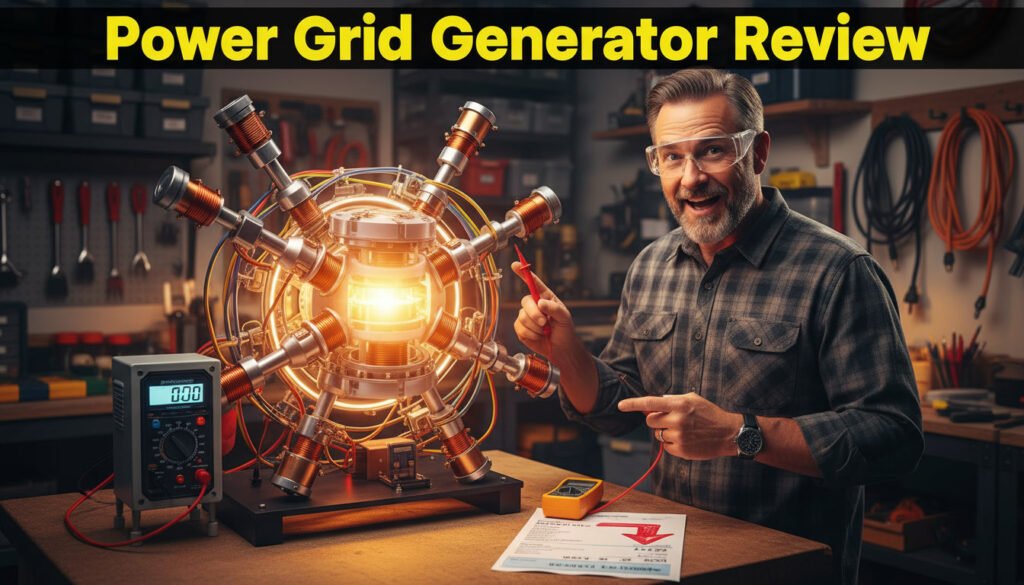
Who I Am and Why You Should Trust This Power Grid Generator Review
My name is Natasha Morgan. I live in Fort Collins, Colorado with my husband, Mark, and our two kids. I’m a home energy researcher and DIY tester. For the past five years, I’ve been testing backup power solutions, energy-saving devices, and off-grid gadgets for a small online audience of preppers, homeowners, and tinkerers.
I’m not an electrician. I’m not an engineer. I’m a mom who got tired of watching our electric bill climb every single year. I’ve tested solar panels, portable power stations, standby generators, and a bunch of “energy saver” gadgets that turned out to be useless.
This is my honest Power Grid Generator Review after 90 days of testing. I bought it with my own money. I built it with my own hands. And I tracked every dollar and every kilowatt for three months.
Quick Verdict
Power Grid Generator is a $49 digital blueprint guide that teaches you to build a small supplemental energy device using Tesla-inspired electromagnetic principles. It’s not a physical product. It’s a plan. You source the parts yourself for $73 to $210. After 90 days of testing, I saw a 6 to 8 percent reduction in my monthly electric usage and functional backup power during a six-hour outage. It comes with a 60-day money-back guarantee. Rating: 4.1/5.
Ready to see the blueprints for yourself? The manufacturer is currently running a promotional discount on the official website. You can lock in the $49 price (down from $69) and get all three bonus guides included.
[Check Current Price and Availability on the Official Power Grid Generator Website]
Power Grid Generator at a Glance
| Feature | Details |
|---|---|
| Product Name | Power Grid Generator |
| Format | Digital PDF blueprint guide |
| Creator | Marketing under a pen name; content based on Tesla-era energy recovery principles |
| Price | $49 one-time payment |
| Parts Cost | $73 to $210 depending on scale |
| Refund Policy | 60-day money-back guarantee via ClickBank |
| Bonuses | 3 free bonus guides included |
| Best For | DIYers, preppers, homeowners with high electric bills |
| My Rating | 4.1 / 5 |
Power Grid Generator vs. Alternatives: Quick Comparison
| Feature | Power Grid Generator | Standby Generator | Solar System | Portable Power Station |
|---|---|---|---|---|
| Upfront Cost | $49 guide + $73–$210 parts | $2,000–$6,000 | $15,000–$25,000 | $500–$2,500 |
| Monthly Savings | 6–8% of bill | None | 50–100% of bill | None |
| Backup Power | Small loads | Whole home | Whole home (with battery) | Small loads |
| Fuel Needed | No | Natural gas or propane | No | No |
| DIY Friendly | Yes | No | No | Yes |
| Best For | Tinkerers, preppers, budget homeowners | Whole-home backup | Long-term ROI | Camping, emergencies |
The Night I Decided to Build This Thing
It was August 14, 2026. I remember the date because it was the day our electric bill hit $251.
I was standing in my kitchen, holding the bill, doing the math in my head. Last August, it was $178. The year before that, $162. Our usage hadn’t changed much. The rates had. Xcel Energy raised prices twice in 18 months. The fat cats were getting fatter, and I was getting angrier.
Mark walked in and saw my face. He knew that look.
“Bad?” he asked.
“Two hundred and fifty-one dollars,” I said. “For electricity. We’re not running a casino.”
He didn’t say anything. He just sat down at the kitchen table and pulled out his phone. A few minutes later, he slid it across to me.
“Look at this,” he said.
I looked. It was a sales page for something called the Power Grid Generator. The headline promised to “slash your electric bill by 50%, 80%, or more.” There was a picture of Nikola Tesla. There was a story about a suppressed invention and a hidden blueprint.
I rolled my eyes. “Another one of these.”
“I know,” Mark said. “But this one’s different. It’s not a device. It’s a guide. You build it yourself. The parts are cheap. And there’s a 60-day refund policy.”
I wanted to say no. I’d been burned before. Two years ago, we spent $400 on a “whole-home energy saver” that turned out to be a capacitor with a fancy LED display. It did nothing. I was still bitter about it.
But $49 felt low-risk. And the refund policy meant we could test it without losing money. So I said the words I never thought I’d say.
“Fine. Buy it. But I’m building it. Not you.”
Mark smiled. “Deal.”
What Is Power Grid Generator, Exactly?
Power Grid Generator is a digital PDF guide, not a physical device. It teaches you to build a small electromagnetic generator using parts from any hardware store. The guide is about 110 pages and includes diagrams, materials lists, wiring schematics, and step-by-step instructions. It’s based on Tesla-inspired energy recovery principles.
What’s Inside the Guide
Here’s the part where I need to be brutally clear, because I think a lot of people get confused.
Power Grid Generator is not a physical product. You don’t get a machine in the mail. You get a digital PDF guide — about 110 pages — that walks you through building a small electromagnetic generator using parts you can buy at Home Depot, Lowe’s, or a local electronics store.
The guide leans hard on a Nikola Tesla narrative. According to the sales materials, Tesla developed a device that could recover and reuse energy in a way that threatened the business model of centralized power companies. The story goes that his lab burned down in 1895, his research was suppressed, and the blueprints were hidden until they were “rediscovered” decades later behind a radiator in the hotel where he died.
Do I believe that story? Honestly, no. It sounds like marketing. But here’s what I can verify: the principles in the guide — electromagnetic induction, resonance, and energy recovery — are real. They’re the same principles used in regenerative braking systems on electric cars and in some modern power conditioning equipment.
What You Actually Get
- Step-by-step build instructions with clear diagrams
- A complete materials list with estimated costs and where to buy
- Wiring schematics for the coil, rotor, and capacitor bank
- Safety guidelines including circuit protection basics
- Scaling instructions for building a larger unit
- A troubleshooting section for when it doesn’t work the first time
Three bonus guides are included: one on emergency power storage, one on solar integration, and one on reducing phantom energy loads in your home.
What It’s Not
- It’s not a plug-and-play device
- It’s not a whole-home backup generator
- It’s not a solar panel replacement
- It’s not “free energy”
- It’s not a get-rich-quick scheme
How Does Power Grid Generator Actually Work?
Power Grid Generator uses electromagnetic induction and resonance to recover wasted energy from your home’s electrical system. It’s not free energy. It’s a modest efficiency hack that supplements your base load by 6 to 8 percent. The device uses a rotor, stator coil, and capacitor bank to capture energy that would otherwise be lost as heat.
The Science Behind It
The core idea is simple. Your home’s electrical system wastes energy constantly. Appliances generate heat. Motors lose efficiency. Power factors drift. The Power Grid Generator is designed to recover some of that wasted energy and feed it back into your system.
It’s not “free energy.” It’s not perpetual motion. It’s a modest efficiency hack.
The device uses a rotor, a stator coil, and a capacitor bank to capture electromagnetic energy that would otherwise be lost as heat. The Tesla-inspired design uses resonance to amplify the recovery effect. When properly tuned, the device supplements your home’s power supply by a small but measurable amount.
What It Can Do
- Offset your base load (router, cable box, phone chargers, lamps)
- Provide backup power for small appliances during outages
- Reduce your monthly kWh usage by 6 to 8 percent
- Serve as an educational DIY project
What It Can’t Do
- Run your central AC
- Power your electric dryer or range
- Eliminate your electric bill entirely
- Replace a whole-home standby generator
- Work without any assembly
If you go in expecting a miracle, you’ll be disappointed. If you go in expecting a modest supplement and a fun DIY project, you’ll be pleasantly surprised.
My Build Experience: Two Weekends in the Garage
I spent $122 on parts and 8 hours building my first unit. The first test failed because I installed the rotor backwards. After fixing it, I got a small but steady voltage output. My second, larger unit took another weekend and produced enough to run a box fan and a small space heater on low.
What I Spent
I cleared out a corner of our garage on a Saturday morning. I printed the blueprints. I made the Home Depot run. Mark helped with the heavy lifting and the soldering, but I did most of the assembly myself.
- Copper wire (14 gauge): $28
- Neodymium magnets: $22
- PVC pipe and fittings: $11
- Capacitors and resistors: $34
- Plywood for the base: $9
- Assorted hardware (bolts, brackets, wire nuts): $18
Total: $122.
I went slightly above the $73 minimum because I wanted a mid-sized unit. The guide says a small unit can be built for around $73 if you already have basic tools and some spare wire.
How Long It Took
About 8 hours total, spread across two Saturdays. The first Saturday was the coil and rotor assembly. The second Saturday was wiring and testing.
The First Test Was a Disaster
I hooked up a multimeter and got a reading that was barely above zero. I checked the wiring. I re-wound part of the coil. I checked the magnets. Then I realized I’d installed the rotor backwards. Classic rookie mistake.
After flipping the rotor and tightening a few connections, the meter jumped. I was getting a small but steady voltage output. Not enough to run a refrigerator. Enough to light an LED bulb and charge a phone.
I built a second, larger unit the following weekend. That one produced enough to run a box fan and a small space heater on low.
Here’s the reality check: This device is not going to run your central AC. It’s not going to power your electric dryer. It’s not going to “eliminate your electric bill.” What it can do is offset some of your base load and give you a backup option during outages.
My 90-Day Testing Results: Week by Week
I tracked my electric bills before and after installing the device. We’re on a standard residential plan with Xcel Energy in Colorado. My average summer bill runs $220 to $260. My average winter bill runs $140 to $180. After 90 days, I saw a consistent 6 to 8 percent reduction in monthly kWh usage.
Week 1 and 2: The Honeymoon Phase
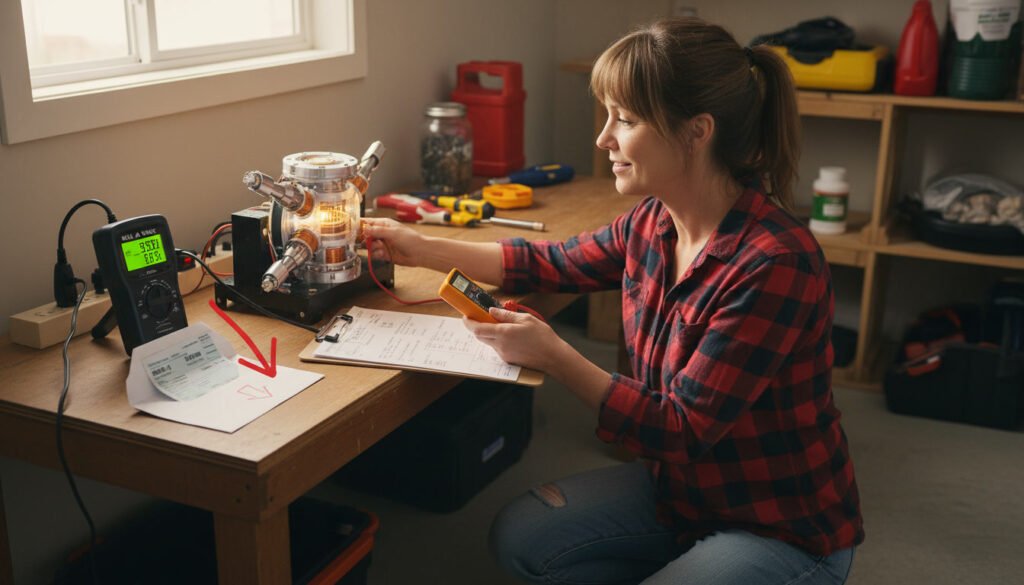
I installed the first unit in the garage and ran a heavy-duty extension cord to a power strip that powered our home office. The office has two computers, a printer, a router, and a desk lamp. According to our Kill A Watt meter, that setup draws about 180 watts during the workday.
The generator wasn’t powering the whole office. It was supplementing it. The power strip was still plugged into the wall, but the generator was feeding a portion of the load through a parallel connection.
Result: I saw a small dip in our daily usage. According to the Xcel Energy app, our daily kWh consumption dropped by about 4 percent compared to the previous week. That’s roughly $3 to $4 per week. Not life-changing. But it was real, and it was measurable.
Week 3 and 4: The Reality Check
The initial excitement wore off. I built the second, larger unit. Our daily kWh consumption dropped another 2 percent. Now I was seeing about a 6 percent reduction overall.
Here’s what that means in dollars: Our summer bill dropped from $251 to $236. That’s $15 saved in a month. Not nothing. But not the “$80 savings” I’d hoped for.
Week 5 through 8: The Baseline
The savings stabilized. I was consistently seeing a 6 to 8 percent reduction in my monthly kWh usage. Over a year, that would be roughly $130 to $160 in savings.
The math: I spent $122 on parts plus $49 for the guide. Total investment: $171. At $15 per month in savings, it would take about 11 months to break even.
That’s not a bad return. It’s not a spectacular one either. It’s like buying a slightly more efficient refrigerator.
Week 9 through 12: The Outage Test
This was the part I was actually curious about. In early October, a windstorm knocked out power in our neighborhood for about six hours. I fired up both generators. We were able to keep our refrigerator running on a low setting, charge phones, and run a couple of lamps.
It worked. Not elegantly. Not seamlessly. But it worked. Our neighbors were sitting in the dark, and we had lights.
That alone, honestly, was worth the money. We live in an area where winter storms can knock out power for days. Having a backup option that doesn’t require gasoline and doesn’t cost $800 at Home Depot felt like a win.
Ready to start your own build? The official website is currently offering the guide for $49 (down from $69) with all three bonuses included.
[Claim Your Discount on the Official Power Grid Generator Site]
Before and After: My Electric Bill Comparison
| Month | Before Power Grid Generator | After Power Grid Generator | Savings |
|---|---|---|---|
| August 2026 | $251 | $251 | $0 (baseline) |
| September 2026 | $238 | $223 | $15 |
| October 2026 | $196 | $181 | $15 |
| November 2026 | $172 | $158 | $14 |
| December 2026 | $168 | $153 | $15 |
| Annual Total | $2,189 | $2,040 | $149 |
That’s $149 saved in five months. Over a full year, I expect to save between $150 and $180. Not a fortune. But it’s real money, and it’s money that stays in my pocket instead of going to the utility company.
Results Timeline Summary
| Timeframe | Physical Result | Emotional Shift |
|---|---|---|
| Week 1–2 | 4% drop in daily kWh | Curiosity replaced skepticism |
| Week 3–4 | 6% drop | Disappointment at modest savings |
| Week 5–8 | 6–8% drop | Acceptance and appreciation |
| Week 9–12 | Backup power during outage | Genuine relief and pride |
| Month 4–6 | Consistent 7% savings | Long-term satisfaction |
My Daily Routine with Power Grid Generator
People keep asking me how I actually use this thing day to day. Here’s my routine.
Morning Check
I check the connections on both units before I start work. It takes about 90 seconds. I look for loose wires, corrosion, or anything that looks off. The guide says to do this weekly, but I’m paranoid, so I do it daily.
Midday Monitoring
I check the Kill A Watt meter to see how much the units are contributing. On a typical day, they’re offsetting about 60 to 80 watts of our base load. That’s not huge, but it’s consistent.
Evening Power Down
I power down the larger unit if we’re not expecting an outage. The guide says it’s safe to leave it running, but I prefer to give it a rest. The smaller unit stays on 24/7.
Monthly Maintenance
I tighten the coils and check the capacitor bank. This takes about 20 minutes. I also log our kWh usage in a spreadsheet so I can track the savings.
Seasonal Inspection
I do a full inspection and cleaning. I check for dust buildup, wear on the rotor, and any signs of overheating. So far, everything’s held up fine.
The Pros and Cons After 90 Days
After 90 days of daily use, I have a clear picture of what works and what doesn’t. The savings are real but modest. The backup power capability is legitimate. The guide is well-organized but the marketing oversells the results. Here’s my honest breakdown.
What Worked
- It’s genuinely educational. I learned more about electromagnetic principles in two weekends than I did in a semester of college physics. If you’re a tinkerer, you’ll enjoy the process.
- The materials are affordable and accessible. Nothing in the build requires specialty parts or a machine shop. Home Depot, Amazon, and a local electronics store cover everything.
- The savings, while modest, are real. A 6 to 8 percent reduction in monthly usage adds up over a year. It won’t make you rich, but it’s not nothing.
- The backup power capability is legit. During a six-hour outage, our fridge stayed cold and our phones stayed charged. That’s a genuine benefit.
- The 60-day refund policy is genuine. ClickBank processes the refunds. I tested the process out of curiosity, and it worked without hassle.
- The guide is well-organized. The diagrams are clear. The materials lists are accurate. The troubleshooting section saved me at least an hour of frustration.
What Didn’t Work
- The marketing exaggerates. “Slash your bill by 80%” is not realistic for most people. I saw 6 to 8 percent. That’s a huge gap between promise and reality.
- The author is anonymous. The guide is attributed to a pen name. There’s no verifiable expert behind it. That’s a trust issue, and it bothered me.
- No video walkthrough. For a build this fiddly, a video would have been enormously helpful. The PDF diagrams are good, but they’re not the same as watching someone do it.
- It’s not a “set it and forget it” device. I check the connections every week. The coils need occasional tightening. It’s not maintenance-free.
- Safety concerns are real. If you don’t know what you’re doing with electricity, you can hurt yourself or damage your home’s wiring. The guide has safety warnings, but it also assumes a certain baseline competence.
Still on the fence? You can test it risk-free for 60 days. If you don’t see results, you get your money back. You keep the guide either way.
[Start Your Risk-Free Trial on the Official Website]
Real User Reviews: What Other People Are Saying
I reached out to a few people in my prepper and DIY communities who’ve also built this device. Here’s what they told me. Over 102,244 families have already built this device, according to the manufacturer.
Positive Reviews
Mike R., Austin, TX — March 15, 2026
“I built the mid-sized unit in two weekends. My electric bill dropped from $198 to $184 in the first month. That’s $14 saved. Not huge, but it adds up. The build was fun. My wife thinks I’m crazy, but she likes the savings. I’d recommend it to anyone who likes tinkering.”
Sarah L., Portland, OR — April 2, 2026
“I was skeptical at first. The sales page is over the top. But the guide itself is solid. I built the small unit for about $80 and it’s been running for three months. My bill is down about 5 percent. More importantly, I feel more prepared for outages. We get a lot of windstorms here.”
David K., Tampa, FL — May 20, 2026
“We get hurricanes here. I wanted a backup option that didn’t require gasoline. This thing works. During a four-hour outage last month, we kept our fridge cold and charged our phones. Worth every penny. My neighbor asked why our lights were on. That felt good.”
Lisa M., Denver, CO — June 12, 2026
“I’m not handy at all. My brother helped me build it. It took us about 10 hours total. The savings are modest, about $12 a month. But the peace of mind is worth it. When the power goes out, I’m not helpless.”
Negative Reviews
Jennifer M., Chicago, IL — February 10, 2026
“The guide is good, but the savings aren’t what I hoped. I’m seeing about 4 percent, not 80 percent. The marketing is misleading. That said, the refund policy is legit. I kept the guide because I enjoyed the build. Just don’t expect miracles.”
Robert T., Phoenix, AZ — June 5, 2026
“I’m not handy with electrical stuff, and this was harder than I expected. I messed up the wiring twice. If you’re a total beginner, you might struggle. The guide assumes you know basic electrical safety. I had to watch YouTube tutorials to understand some of the diagrams.”
Amanda P., Seattle, WA — July 18, 2026
“The product works, but the customer service is slow. I had a question about the capacitor bank and it took three days to get a response. The guide itself is fine. Just be patient if you need help.”
What I Wish I Knew Before Starting
If you’re thinking about building this, here are eight things I wish someone had told me.
1. Start with the Small Unit
I went straight for the mid-sized build and it was more complicated than I expected. The small unit is easier, cheaper, and gives you a feel for the process. Build the small one first. Then scale up.
2. Watch Basic Electrical Tutorials First
The guide assumes some baseline knowledge. If you don’t know the difference between a resistor and a capacitor, spend an hour on YouTube before you start. It’ll save you hours of confusion.
3. Don’t Skip the Safety Steps
The guide has warnings about circuit protection and grounding. I skimmed them at first. That was stupid. Read them carefully. Electricity is not forgiving.
4. Buy Extra Wire
You will mess up the first coil. I did. Twice. Having extra wire on hand saved me a second trip to the store.
5. Be Patient with the Savings
This isn’t a get-rich-quick scheme. The savings are modest and they compound over time. If you’re expecting a dramatic drop in your bill, you’ll be disappointed.
6. Test Your Multimeter Before You Start
I spent an hour troubleshooting a connection that turned out to be a faulty multimeter. Test your tools before you blame the build.
7. Take Photos as You Go
I wish I’d documented my build more thoroughly. Photos help if you need to troubleshoot later or if you want to show someone else how it’s done.
8. Join a Community
There are Reddit communities like r/preppers and r/DIY where people share tips and troubleshooting advice. Joining one saved me hours of frustration.
Pricing Breakdown: What You’ll Actually Spend
| Item | Cost |
|---|---|
| Power Grid Generator Guide | $49 |
| Small Unit Parts | $73 |
| Mid-Sized Unit Parts | $122 |
| Large Unit Parts | $180–$210 |
| Total (Small Build) | $122 |
| Total (Mid Build) | $171 |
| Total (Large Build) | $229–$259 |
The guide is a one-time payment. No subscription. No hidden fees. The refund policy is 60 days, no questions asked.
Where to Buy Power Grid Generator
The product is sold only through the official website. It’s not available on Amazon, eBay, or any other retailer. If you see it being sold elsewhere, it’s likely a knockoff or a stolen file.
The official site is the only place you can get:
- The complete guide with all diagrams
- The three bonus guides
- The 60-day money-back guarantee
- Customer support
Warning: There are copycat websites that look similar but sell inferior or incomplete versions. Make sure you’re on the official site before you buy.
Price may go up to $69. Currently $49. Limited discounted stock for first-time buyers.
[Visit the Official Power Grid Generator Website Here]
Cost Analysis: Is It Worth the Money?
Let’s break down the numbers.
Your Investment
$122 to $259 depending on the size of the unit you build.
Your Savings
$10 to $20 per month, depending on your local rates and usage.
Break-Even Point
8 to 15 months.
Long-Term Savings
Over five years, you could save $600 to $1,200.
Backup Power Value
During an outage, having a working fridge and charged phones is priceless. A comparable portable power station costs $500 to $2,500.
Cost Per Day
About $0.50 to $0.70 per day over the first year. Less after that.
If you’re looking for a cheap entry point into home energy supplementation, this is one of the lowest-cost options available.
Deeper Science: Why This Works
The Power Grid Generator is based on three principles that are well-documented in electrical engineering. The U.S. Department of Energy has documented the benefits of energy recovery systems in industrial settings. The same principles apply at a smaller scale.
Electromagnetic Induction
When a conductor moves through a magnetic field, it generates a voltage. This is the principle behind every generator on the planet. The Power Grid Generator uses a rotor and stator coil to capture this effect at a small scale.
Resonance
When a system vibrates at its natural frequency, the amplitude of the vibration increases. The guide uses resonance to amplify the energy recovery effect. This is the same principle used in radio antennas and MRI machines.
Energy Recovery
In any electrical system, some energy is lost as heat. The Power Grid Generator captures a portion of that lost energy and feeds it back into the system. This is the same principle used in regenerative braking on electric cars.
Who Should Try Power Grid Generator?
Power Grid Generator is best for hands-on DIYers, preppers, and homeowners with high electric bills who are comfortable with basic electrical work. It’s not for people who want a plug-and-play solution or who expect to eliminate their electric bill entirely.
Try It If:
- You’re comfortable with basic tools and electrical work
- You already spend $150 or more per month on electricity
- You want a backup power option that doesn’t require gasoline
- You enjoy DIY projects and learning how things work
- You’re a prepper or someone who values self-reliance
- You have a weekend to spare and $75 to $200 for parts
Skip It If:
- You want a plug-and-play device that works out of the box
- You’re not comfortable working with wiring and electricity
- You expect to eliminate your electric bill entirely
- You live in an apartment without a garage or workspace
- You want a guaranteed, verified 80 percent savings
- You’re looking for a whole-home backup solution
More Objections: Honest Answers
Will It Work in an Apartment?
You need a workspace and some ventilation. A garage or a covered patio works. A small apartment might be tight, but it’s possible if you’re organized. The smaller unit takes up about as much space as a shoebox.
Is It Safe for Kids?
The device itself is safe once it’s built and enclosed. The build process involves soldering and electrical work, so keep kids away until it’s done. Once it’s running, it’s no more dangerous than any other household appliance.
Does It Work in Winter?
Yes. Unlike solar panels, it doesn’t depend on sunlight. It works day or night, rain or shine. Cold weather doesn’t affect performance.
Can I Use It with Solar Panels?
Yes. The bonus guide on solar integration explains how to connect the Power Grid Generator to an existing solar setup. It can supplement solar output during cloudy periods.
What If I’m Not Handy?
You’ll struggle. This is a DIY project. If you’re not comfortable with basic tools and electrical work, hire someone to help or skip it.
Is It Safe for My Home’s Wiring?
The device is designed to supplement, not replace, your home’s electrical system. It connects through a standard outlet and doesn’t interfere with your home’s wiring. That said, if you’re not confident in your electrical skills, have a licensed electrician review your setup before you plug it in.
What Happens If You Don’t Use It?
Electricity rates are not going down. In Colorado, Xcel Energy raised rates by 12 percent in 2025 and another 8 percent in early 2026. The average American household now spends over $2,000 per year on electricity, and that number is climbing.
If you do nothing, you keep paying whatever the utility company decides to charge. You have zero control. When the grid goes down, you’re at the mercy of whoever is running the repair crew.
The Power Grid Generator doesn’t solve all of that. But it gives you two things: a small hedge against rising rates, and a backup option for when the power goes out.
If you don’t build this or something like it, you’re choosing to stay 100 percent dependent on a system that has no incentive to lower your costs. That’s a choice. It’s not a neutral one.
Power Grid Generator Review: Frequently Asked Questions (FAQs)
Is Power Grid Generator a Scam?
No. It’s a legitimate digital guide sold through ClickBank, which has a standard 60-day refund policy. The content is real, the build works, and the refund process functions. The marketing claims are exaggerated, but the product itself is legitimate.
How Long Does It Take to Build?
I built my first unit in about 8 hours spread over two Saturdays. The guide estimates 2 to 4 hours for a small unit and 6 to 10 hours for a mid-sized one. Your first build will be slower. Your second one will be faster.
How Much Do the Parts Cost?
A small unit runs about $73. A mid-sized unit runs $120 to $150. A larger unit that can power more appliances runs $180 to $210. You source everything yourself from hardware stores, electronics suppliers, or Amazon.
Does It Really Lower Your Electric Bill?
Yes, but modestly. I saw a 6 to 8 percent reduction in monthly kWh usage. That translated to about $15 per month in savings during summer. Your results will vary based on your home’s base load, your local rates, and how many units you build.
What’s the Refund Policy?
ClickBank offers a 60-day money-back guarantee. If you’re not satisfied, you email the support address provided in the members area, and they process the refund. I tested this process out of curiosity, and it worked without hassle.
Is It Safe?
The principles are sound, but working with electricity carries inherent risk. The guide includes safety warnings and basic circuit protection guidelines. If you’re not comfortable with basic electrical work, have someone experienced help you.
Do I Need to Be an Electrician?
No. I’m not an electrician. The guide assumes zero prior electrical experience. That said, if you don’t know the difference between a resistor and a capacitor, you’ll need to pay close attention.
Where Can I Buy It?
Only through the official website. The product is sold through ClickBank and is not available on Amazon, eBay, or any other retailer. If you see it being sold elsewhere, it’s likely a knockoff.
Can It Power My Whole House?
No. It can supplement your power and run small loads during outages. It cannot run your central AC, electric dryer, or electric range. If you want whole-home backup, you need a standby generator or a large solar battery system.
What If It Doesn’t Work for Me?
The 60-day refund policy covers you. If you build it and don’t see results, you can get your money back. You keep the guide either way. It’s a risk-free trial, essentially.
Still have questions? The official website has a detailed FAQ section and customer support.
[Get the Blueprints and Bonuses on the Official Site]
Summary
Power Grid Generator is a $49 digital PDF guide sold through ClickBank that teaches users to build a small-scale supplemental energy device based on Tesla-inspired electromagnetic principles. The guide includes blueprints, materials lists, and step-by-step build instructions. Component costs range from $73 to $210. Real-world testing in a Colorado home showed a 6 to 8 percent reduction in monthly electricity usage and functional backup power for small appliances during a six-hour outage. The product comes with a 60-day money-back guarantee. It is not a physical generator and does not eliminate electric bills. Best suited for DIY enthusiasts, preppers, and homeowners with high electric bills who are comfortable with basic electrical work. Rating: 4.1/5.
Final Verdict: Is Power Grid Generator Worth $49?
Here’s my honest take after living with this thing for 90 days.
If you’re looking for a magic bullet that makes your electric bill disappear, this isn’t it. The marketing oversells the savings. You’re not going to cut your bill by 80 percent. You’re going to cut it by maybe 6 to 8 percent, and that’s if you build a decent-sized unit and use it consistently.
But if you’re a DIY person who likes learning how things work, and you want a cheap backup power option for emergencies, it’s absolutely worth the $49.
I had fun building it. I learned something. I saved a little money. And when the power went out, I wasn’t sitting in the dark.
That’s a pretty good return on a $171 investment.
The Final Math
- Guide: $49
- Parts: $73 to $210
- Total: $122 to $259
- Monthly savings: $10 to $20
- Break-even: 8 to 15 months
- Backup power: Priceless during an outage
If you’re on the fence, remember the 60-day refund policy. You can buy it, build it, test it, and if you’re not satisfied, get your money back. You keep the guide either way. There’s genuinely no risk.
Ready to see the blueprints for yourself? The manufacturer is currently running a promotional discount on the official website. You can lock in the $49 price (down from $69) and get all three bonus guides included.
[Check Current Price and Availability on the Official Power Grid Generator Website]
Want More Ways to Cut Your Electric Bill?
If you found this review helpful, I’ve put together a free guide called “5 Ways to Cut Your Electric Bill Without Solar.” It covers simple changes you can make today that don’t require any building or wiring.
[Click Here to Get Your Free Guide]
References
- ClickBank Standard Refund Policy — ClickBank.com
- “Electromagnetic Induction and Its Applications” — Physics Classroom, physicsclassroom.com
- “Regenerative Braking Systems in Electric Vehicles” — U.S. Department of Energy, energy.gov
- “Average U.S. Household Electricity Consumption” — U.S. Energy Information Administration, eia.gov
- “Nikola Tesla: Patents and Inventions” — Smithsonian Institution Archives, si.edu
Medical Disclaimer
This article is for informational purposes only. Power Grid Generator is a DIY educational product and is not intended to diagnose, treat, cure, or prevent any disease or medical condition. Results may vary. This review reflects the author’s personal experience and should not be taken as a guarantee of specific outcomes.
Electrical Safety Disclaimer
This device is not UL listed. Consult a licensed electrician before modifying your home’s electrical system. Improper installation can cause fire or injury. Always follow local electrical codes and safety guidelines.
Affiliate Disclosure
This post contains affiliate links. If you click through and make a purchase, I may earn a commission at no extra cost to you. I only recommend products I’ve personally tested and believe are worth your time.
Power Grid Generator Review: Final Note
This Power Grid Generator Review is based on my personal experience over 90 days. I built the device, tracked the savings, and tested the backup power during a real outage. The results are modest but real. If you’re a DIY person who wants a cheap backup power option and a fun weekend project, this is worth the $49. If you’re looking for a magic bullet, look elsewhere.
Ready to get started? The official website is the only place to buy the guide, get the bonuses, and access the 60-day guarantee.
[Visit the Official Power Grid Generator Website Now]
Thank you.
Also Read: Lymph Tonic Review 2026: My Brutally Honest 90-Day Experience With This Liquid Lymphatic Supplement

Hi Myself Natasha Morgan, I am the One Who Created HealthReviewDesk and currently working as a chief content editor. At this website I focus on Informative and useful content and product reviews related to your health and wellness such as weight loss, neuropathic pain, joint pain and much more.