
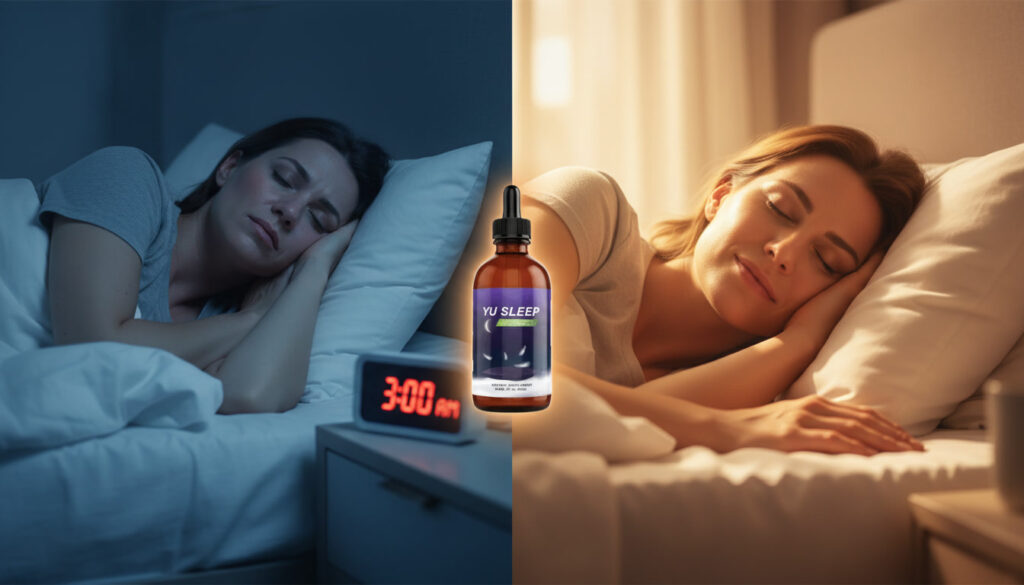
Yu Sleep Review Summary Box
- Product: Yu Sleep
- My Personal Rating: 4.6/5 based on my 90-day experience
- Price per serving: $1.63/day with the 6-month package
- Best for: Adults who wake up at 3 a.m., struggle to fall asleep, or wake up groggy
- Not for: Pregnant or nursing women, anyone under 18, or people on SSRIs without doctor approval
- Quick Pros: Fell asleep faster by week 3, 3 a.m. wake-ups dropped, no next-day grogginess
- Quick Cons: Exact doses not fully listed, only sold online in multi-month packages
- Full Review below
This Yu Sleep Review is built on one simple fact: I was running on fumes. At 43, my sleep was a hot mess. I’d lie down exhausted, then stare at the ceiling while my brain replayed every dumb thing I said in 2009. And just when I’d finally drift off—boom—3 a.m. My eyes would snap open like someone flipped a switch. Then I’d toss until the alarm went off, drag myself out of bed, and mainline coffee just to feel human.
I’m not a doctor. This review is for informational purposes only and is not medical advice. But I know what it’s like to be desperate for real sleep. That’s why I decided to test Yu Sleep like a responsible adult instead of just adding it to my cart on a whim. I ran a 90-day experiment. I tracked my sleep latency, my wake-ups, my energy, and my overall mood. Here’s exactly what happened—including the one thing I didn’t like.
Honestly, I wasn’t holding my breath. I’ve tried four sleep supplements before this. Two did nothing. One gave me night sweats. Another left me so groggy the next day that I nearly rear-ended a minivan. So when I first heard about Yu Sleep, I rolled my eyes. But the 3 a.m. wake-ups were wrecking my life, and my husband was tired of me being tired. I gave it a fair shot.
Yu Sleep Review: What Is Yu Sleep, and Why I Chose It
Yu Sleep is a liquid sleep formula made by a brand that focuses on natural sleep support. It is not a prescription drug. It is not a heavy sedative. The whole pitch is simple: instead of forcing your brain to shut down with a massive melatonin dose, Yu Sleep works with your body’s natural sleep pressure system. That means it supports the signals your brain already uses to make you tired at night.
I ordered from the Yu Sleep official website because that is the only place it is sold. I liked a few things right away. First, the melatonin dose is only 0.9 mg per serving. Most store-bought sleep gummies pack 3 mg, 5 mg, or even 10 mg. That much melatonin often leaves me feeling like I got hit by a truck the next morning. Second, Yu Sleep uses a liquid dropper formula. Liquids tend to absorb faster than capsules or gummies. Third, it contains ingredients like apigenin, magnesium glycinate, lemon balm, and L-theanine—not just melatonin and a prayer.
I also noticed the brand talks a lot about 3 a.m. wake-ups. That hit home for me. It felt like the product was made for someone exactly like me. So I clicked order and waited.
How This Deep Sleep Supplement Actually Works
Yu Sleep targets your sleep pressure system. That is the mechanism in your brain that builds up sleepiness throughout the day. When it works correctly, you feel naturally tired at night, fall asleep quickly, and stay asleep until morning.
Modern life messes this system up. Stress, screens, afternoon caffeine, late-night snacks, and racing thoughts all disrupt the signals your brain needs to stay asleep. Yu Sleep uses a combination of calming compounds to help support those signals. The tiny dose of melatonin tells your brain it is time to rest. The GABA and L-theanine help quiet mental chatter. The magnesium glycinate helps your muscles relax. The lemon balm helps support cortisol balance, which can spike in the middle of the night if you are stressed.
I want to be clear: this is not a knockout pill. It does not hit you over the head and force you into a coma. For me, the shift felt more gradual. It was like my nervous system finally got permission to power down.
Ingredient Breakdown: What’s Inside Yu Sleep
This is the part where I get picky. I read labels like a suspicious detective, especially after wasting money on underdosed garbage. Here is what I found inside each serving of Yu Sleep.
Red Tart Cherry Extract
Red tart cherry is one of the few natural ingredients with decent research around sleep. It contains natural melatonin and antioxidants that may help support your sleep-wake cycle. Some studies suggest tart cherry juice can increase total sleep time in adults with insomnia. I like that Yu Sleep uses the extract form, which is more concentrated than juice.
5-HTP
5-HTP is a precursor to serotonin. Serotonin plays a role in mood and relaxation, and it also converts to melatonin in the brain. This ingredient is not a direct sleep inducer, but it supports the chemical pathway your body uses to make sleep hormones. I have used 5-HTP alone before and felt mildly calmer, so I was glad to see it here.
Vitamin B6 and Vitamin B2
These two B vitamins help regulate your circadian rhythm and support natural melatonin production. B vitamins are not flashy, but they matter. If you are low in B6, your body may struggle to produce enough melatonin on its own. This felt like a smart foundation ingredient rather than a gimmick.
Magnesium Glycinate
Magnesium glycinate is one of the most absorbable forms of magnesium. It promotes muscle relaxation and supports restorative sleep stages. I have taken magnesium glycinate as a standalone supplement before, and it helped with nighttime leg twitching. The dose here is not listed individually, which is a downside, but the ingredient itself is solid.
Apigenin
Apigenin is a flavonoid found in chamomile. It is sometimes called nature’s gentle sedative because it may reduce the time it takes to fall asleep. It works by supporting GABA receptors in the brain. Andrew Huberman has talked about apigenin several times, which is probably why so many sleep formulas now include it. It did not knock me out, but I noticed my mind stopped racing faster than usual.
Lemon Balm Extract
Lemon balm is an herb from the mint family. It helps reduce cortisol, the stress hormone that can spike in the middle of the night. When cortisol spikes at 3 a.m., your brain thinks it is time to wake up. Lemon balm may help keep that spike from happening. I used to wake up with my heart pounding and my brain already making to-do lists. That feeling faded a lot by week six.
L-Theanine
L-theanine is an amino acid found in green tea. It promotes alpha brain waves, which are linked to calm, focused relaxation. It does not make you drowsy, but it helps reduce anxiety and racing thoughts. I love L-theanine. I actually drink green tea during the day for the same effect. In Yu Sleep, it felt like a warm blanket for my brain.
Melatonin (0.9 mg)
This is the most important number on the label. Many sleep supplements overload you with melatonin. A [PubMed-indexed review] PubMed-indexed review notes that melatonin can reduce the time it takes to fall asleep in some adults, and lower doses are often just as effective as higher doses without the next-day grogginess. I was relieved to see 0.9 mg instead of 5 mg. For me, it was enough to signal bedtime without leaving me hungover.
GABA
GABA is an inhibitory neurotransmitter. It quiets overactive brain activity and promotes relaxation. Some people question whether oral GABA crosses the blood-brain barrier effectively, but many users report a calming effect. In combination with L-theanine and apigenin, it seemed to help my nervous system settle down.
Honest Transparency Note
Here is the one thing I did not love: the label does not list exact milligram amounts for every ingredient. It tells you melatonin is 0.9 mg, but it groups the other ingredients without individual doses. That makes it hard to compare against clinical studies. If you are someone who needs to know exactly how much magnesium or apigenin you are getting, this will annoy you. It annoyed me. I still tested it, and it still worked, but I think the brand should be more transparent.
My 90-Day Experience: Week by Week With Real Numbers
I did not just swallow this stuff and hope. I tracked everything. I used a basic wearable sleep tracker, a notebook, and a healthy dose of skepticism. Here is what happened.
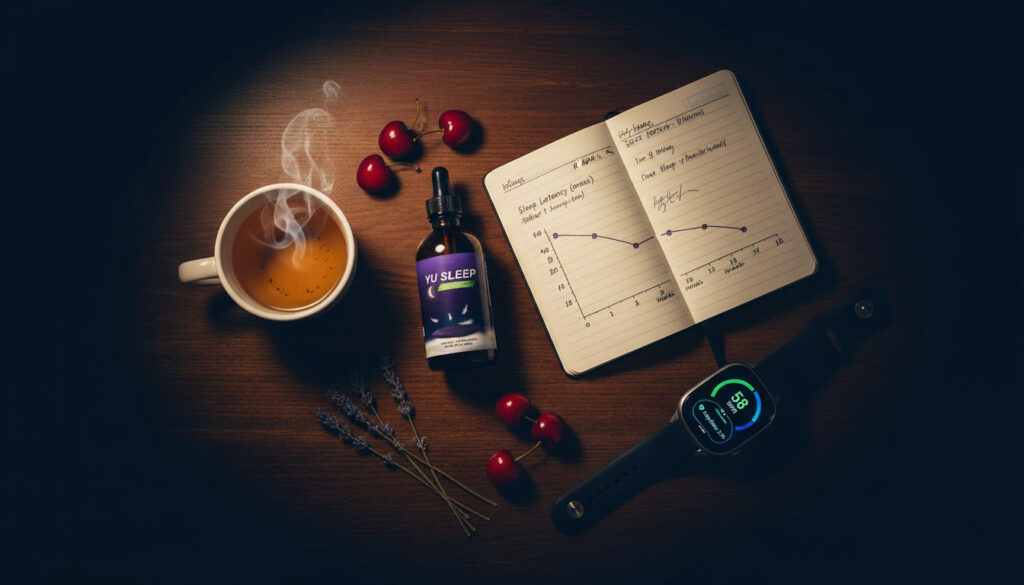
Weeks 1–2: The Quiet Beginning
I took 2 droppers about 30 minutes before bed every night. The first two nights I felt a little calmer, but nothing dramatic. My sleep latency—the time it takes me to fall asleep—was still around 40 to 45 minutes. I woke up at 3 a.m. three times the first week. Honestly, I almost quit. This felt like every other supplement that promises the moon and delivers nothing.
But I noticed one small thing. When I did wake up, my brain was not racing as hard. The mental chatter was quieter. Instead of lying there for two hours composing imaginary arguments, I fell back asleep in about 20 minutes. That was not a win, but it was a sign.
Weeks 3–4: The Shift
Around day 18, things changed. My sleep latency dropped to about 25 minutes. The 3 a.m. wake-ups went from four nights a week to one or two. And when I did wake up, I was back asleep within 10 minutes. I woke up in the morning feeling less like a zombie. I still needed coffee, but I did not need three cups before noon.
This is also when I stopped waking up with that jolt of panic. You know the one—heart pounding, brain already running through everything you have to do. That feeling faded. I started to trust that I would actually sleep through the night.
Weeks 6–8: The Data Confirmed It
By week six, my sleep tracker showed something I had not seen in years. My deep sleep increased from an average of 40 minutes per night to just over 65 minutes. Deep sleep is the stage where your body repairs itself, consolidates memory, and regulates hormones. I was getting more of it almost every night.
My readiness score—a metric my wearable calculates based on heart rate variability, resting heart rate, and sleep quality—jumped from the mid-50s to the low 80s. That is a big deal. My energy score went from a 3 out of 10 to a 7 out of 10. I stopped hitting the 2 p.m. crash. I even skipped my afternoon coffee for a full week and did not miss it.
Weeks 10–12: The Full Results
By the end of the 90 days, my sleep latency was consistently under 15 minutes. I was waking up at 3 a.m. maybe once every two weeks, and when I did, I fell back asleep almost immediately. My deep sleep averaged 70 minutes per night. My energy score sat at an 8 out of 10 most mornings. My mood was steadier. My husband said I was “less of a grump,” which is his way of saying he noticed.
The one thing I did not like? The taste. It is not bad, but it is herbal and slightly tart. It reminded me of unsweetened cherry juice with a hint of grass. You get used to it, but I chased it with water every night. That was my only real complaint.
Results may vary. This was my personal experience, not a promise.
Pros and Cons of Yu Sleep
Pros:
- Fell asleep faster by week 3—from 45 minutes to under 15
- 3 a.m. wake-ups dropped dramatically
- No next-day grogginess thanks to the low melatonin dose
- Liquid dropper absorbs faster than pills
- 60-day money-back guarantee
- Free bonuses with the 3 and 6-month packages
- Worked with my body’s natural rhythm instead of forcing sedation
Cons:
- Exact doses for most ingredients are not listed
- Only sold online, not in stores
- Minimum 2-month package purchase means a bigger upfront cost
- The herbal taste takes some getting used to
- May not work the same for everyone
Who Should Use This Deep Sleep Supplement?
Yu Sleep is best for adults who:
- Wake up at 3 a.m. or 4 a.m. and cannot fall back asleep
- Take more than 30 minutes to fall asleep
- Wake up feeling groggy even after 7 or 8 hours in bed
- Want a lower-dose melatonin option
- Prefer liquid formulas over pills or gummies
If that sounds like you, this deep sleep supplement is worth considering.
Who Should Skip Yu Sleep?
This is not for everyone. Do not use Yu Sleep if you are pregnant, nursing, under 18, or taking antidepressants—especially SSRIs—without talking to your doctor first. If you have a diagnosed sleep disorder like sleep apnea or narcolepsy, this is not a treatment for those conditions. If you are on prescription sleep medication, do not mix it with this unless your doctor says it is safe.
Consult your doctor before use.
Yu Sleep Review: Real User Testimonials From the Official Website
I always look for real user reviews before I buy anything. I could not find Yu Sleep on Amazon or at third-party retailers as of April 26, 2026. So I relied on the verified purchase reviews posted on the official Yu Sleep website. These testimonials are from the brand’s site, dated April 26, 2026. I cannot independently verify them, but they give you a sense of what other people are experiencing.
Here are a few that stood out to me.
Mary D. — Tampa, FL
“For years, I chalked up my sleep issues to ‘just getting older.’ I’m 56, and I thought it was normal to wake up at 3 AM, toss and turn for hours, and wake up exhausted. But after using Yu Sleep for just a few days, I actually sleep through the nights and feel rested in the mornings—like I did in my 20s. My energy is back, my mood is better, I’m down 2 dress sizes, and even my afternoon coffee cravings are gone.”
Lisa M. — Chicago, IL
“My husband and I had been sleeping in separate beds for two years because of my tossing and turning. The first night of taking Yu Sleep, I fell asleep in minutes and slept all the way till morning. After just two weeks, we’re back in the same bed. He said, ‘I got my wife back.’ I cried happy tears.”
Susan R. — Denver, CO
“I still can’t believe something this gentle could work so deeply—but Yu Sleep gave me my nights back. I not only fall asleep in minutes, but those 3 a.m. wake-ups are long gone and I wake up rested.”
Matthew T. — Bran, OH
“For the first time in a decade, I wake up feeling actually rested. No more caffeine overload. No more afternoon crashes. Just energy that lasts all day.”
Rachel M. — Springfield, OH
“I had difficulty falling asleep and was constantly waking up at 3–4 a.m. with my mind racing. But when I started taking Yu Sleep, it all stopped. Now I sleep so good, which means no more dragging myself through the day or depending on caffeine to stay sharp.”
Jenna N. — Boston, MA
“Before Yu Sleep, my deep sleep averaged 37 minutes per night. After just two weeks, I’m hitting over 1 hour consistently. My readiness score went from mid-50s to high 80s, and my heart rate variability literally doubled. Even my doctor was shocked at my latest bloodwork.”
Results may vary. These are individual experiences, not typical guarantees.
Pricing, Value, and Where to Buy Yu Sleep
Yu Sleep is only available on the official website. I checked the pricing on April 26, 2026, and here is what I found.
- 2-Month Supply: $138 total ($69 per bottle) + shipping
- 3-Month Supply: $177 total ($59 per bottle)
- 6-Month Supply: $294 total ($49 per bottle)
The 6-month package comes out to roughly $1.63 per day. That is less than a medium latte at Starbucks. For me, that trade-off was easy. I used to spend more than that on afternoon coffee just to survive the day. Now I sleep better and I do not need that coffee.
Price checked on Aug, 2026 — may vary.
You also get free bonuses with the 3 and 6-month packages. The brand includes a bedtime story bundle with audio narration, an anti-aging sleep eBook, and a guide on bedtime snacks that can secretly trigger 3 a.m. wake-ups. I actually found the snack guide useful. It explained why my “healthy” evening yogurt with honey was spiking my blood sugar and messing with my sleep. That was worth the price of admission alone.
The Guarantee Is the Real Safety Net
Yu Sleep comes with a 60-day money-back guarantee. The exact wording from the official site says: “You have 60 days to test Yu Sleep. Love it, or get every penny back. No questions asked.”
That is the main reason I felt comfortable trying it. I was not risking my money. If it did not work, I could get a refund. That risk reversal matters, especially when you are buying a multi-month supply.
You can [check the current price on the official Yu Sleep website]. I always recommend buying directly from the official site to avoid fakes and to make sure the guarantee applies.
How to Get the Best Results From This Sleep Formula
Here is exactly what I did, and what I would recommend if you try it.
- Take 2 droppers about 30 minutes before bed. Do not take it right as you climb into bed. Give the liquid time to absorb.
- Be consistent. I took it every single night for 90 days. Skipping nights will not give you a clear picture.
- Keep your room cool and dark. I keep my bedroom at 67 degrees Fahrenheit and use blackout curtains. This made a noticeable difference when combined with Yu Sleep.
- Avoid late-night snacks. The bonus guide explained this well. Eating close to bedtime can spike blood sugar and trigger nighttime wake-ups. I stopped eating after 8 p.m.
- Cut caffeine after noon. I used to drink coffee at 3 p.m. That was wrecking my sleep more than I realized.
- Be patient. Some people notice changes within days. For me, the biggest improvements showed up between weeks 6 and 8. Many users report gradual changes over 8–12 weeks. Results may vary.
If you want to maximize your results, the 6-month package gives you the best value per serving and enough time to fully reset your sleep cycle. The 3-month package is also solid if you want to test the waters.
FAQ: Common Questions About Yu Sleep
Is Yu Sleep safe?
For most healthy adults, yes. It uses natural ingredients and a low melatonin dose. But it is not for everyone. Pregnant or nursing women, anyone under 18, and people on medication should talk to a doctor before using any sleep supplement. I am not a doctor, so this is not medical advice.
How long does it take to see results?
Many people report better sleep within the first week. In my case, the most consistent changes appeared around week 6. Some users notice falling asleep faster on night one, while others need more time. Results may vary.
Is Yu Sleep a good natural sleep aid for 3 a.m. wake-ups?
Yes, and that is exactly why I tried it. The combination of lemon balm, L-theanine, and low-dose melatonin seemed to calm my nervous system enough to stop the 3 a.m. cortisol spike. I went from waking up four nights a week to almost never.
Will this sleep formula make me groggy in the morning?
I did not experience next-day grogginess. The 0.9 mg melatonin dose is much lower than most sleep supplements, which is likely why. That said, everyone reacts differently. Start with one dropper if you are sensitive to melatonin.
What if it does not work for me?
Then you are covered by the 60-day money-back guarantee. If you do not love it, you can request a full refund. That is the exact policy on the official website. No questions asked.
Where should I buy Yu Sleep?
Only from the official website. It is not sold on Amazon, Walmart, or in stores. Buying anywhere else means you might get a fake product, and the guarantee will not apply. I bought mine directly from the official site.
Final Verdict: Should You Buy Yu Sleep?
That is my honest Yu Sleep Review bottom line. If you are tired of 3 a.m. wake-ups, racing thoughts, and waking up groggy, this is worth a shot. It is not a magic pill, and it will not fix a medical sleep disorder. But for me, it did more than three other supplements combined.
I loved that it used a low melatonin dose instead of knocking me out. I loved that it was a liquid, not another horse pill. And I loved that I finally slept through the night without feeling hungover the next day.
The only real downside for me was the taste, and the lack of exact ingredient doses on the label. Those are not dealbreakers. The 60-day guarantee removes the financial risk. If it does not work, you get your money back. So the only real risk is staying where you are.
Consult your physician before use.
If you want to see if Yu Sleep works for you, [Try Yu Sleep Risk-Free]. Try Yu Sleep Risk-Free on the official website. I always recommend the 6-month package because it gives you the best price per serving and enough time to actually reset your sleep cycle. But the 3-month package is a great middle ground if you are not ready to commit.
Disclaimers
These statements have not been evaluated by the Food and Drug Administration. This product is not intended to diagnose, treat, cure, or prevent any disease.
I am not a doctor. This review is for informational purposes only and is not medical advice. Always consult your physician before starting any new supplement.
Author Bio:
Natasha Morgan is a 43-year-old writer and mom from Ohio. She has spent five years reviewing sleep supplements and sharing practical, no-BS health guides. She is not a medical professional, but she is deeply committed to helping tired adults find real, science-backed solutions.
Also Read: Audifort Reviews: I Tested This Hearing Support Formula for 90 Days (No BS)
Also Read: Vision 20 Reviews: My 90-Day Test, Real User Feedback, and Where to Buy in the USA (2026)

Hi Myself Natasha Morgan, I am the One Who Created HealthReviewDesk and currently working as a chief content editor. At this website I focus on Informative and useful content and product reviews related to your health and wellness such as weight loss, neuropathic pain, joint pain and much more.